


REQUEST A QUOTE OR MORE INFORMATION
Fill out the form below for someone to contact you reguarding quotes and questions.Or visit our contact page for general contact information.
News

Jun. 30, 2026
When it comes to maximizing the efficiency and performance of your farming equipment, matching the specifications of your agricultural gearbox to your tractor model is crucial. Farmers frequently encounter challenges related to compatibility, leading to inefficiencies and equipment failures. Understanding specification details such as torque ratings, gear ratios, and mounting dimensions can mitigate these common issues. In this article, we will dissect the process of aligning gearbox specifications with tractor models, drawing insights from real-world experiences and professional insights.
Before diving into the matching process, gather the following tools and materials to streamline your efforts:
Utilize the tractor manual to identify key characteristics such as horsepower (HP) and torque requirements. For instance, if your tractor operates at 200 HP and has a torque rating of 600 Nm, those metrics will guide your gearbox selection.
Check the specifications of potential gearboxes from GTM. For example, a gearbox might have a torque capacity of 750 Nm and a gear ratio of 1:3, meaning it can effectively handle your tractor's power output.
Using your measuring tool, compare the dimensions of the gearbox and the mounting points on your tractor. Ensure that they match within 2% to avoid installation issues.
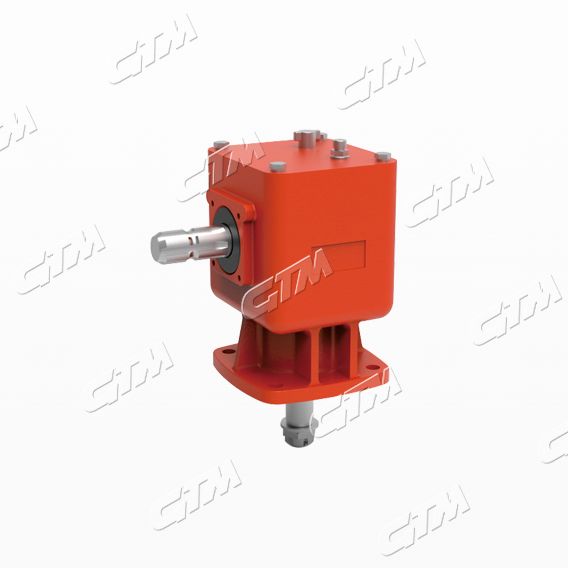
With data on both your tractor and the gearbox, analyze compatibility. A gear ratio close to or matching your tractor’s operational requirements ensures that your machine runs efficiently.
Before installation, double-check that all torque settings are within acceptable limits. For instance, if the gearbox operates at a nominal torque of 600 Nm, ensure you are not exceeding this during installation.
Even seasoned farmers can encounter mistakes when selecting agricultural gearboxes. Here are a few frequent pitfalls:
Matching agricultural gearbox specifications to your tractor model is critical for efficient operation. Always refer to manufacturer specifications from reliable brands like GTM to avoid common errors. With precise measurements and careful comparisons, you can enhance the performance and durability of your farming equipment.
Q: How often should I check my gearbox specifications?
A: It’s advisable to conduct a compatibility review at least once a year or whenever replacing parts or upgrading equipment.
Q: Where can I find compatibility information for different brands?
A: Manufacturer websites and agricultural machinery forums usually have detailed compatibility resources.
Q: What is the average lifespan of an agricultural gearbox?
A: Depending on usage, an agricultural gearbox can last anywhere from 3,000 to 10,000 operating hours when adequately maintained.
GEARBOX MANUFACTURER
Zhejiang GTM was established in 1997, which located in economic development zone of Wenling city, southeast of China.
GTM agricultural gearbox products include spiral and straight bevel gearbox, cylinder gear speed reducer, worm reducer, and transmission case etc, which are widely used in various fields as Rotary cutter, grain transportation and storage equipment, Rice harvester,baler,hayrake, rotary tillers, pesticide sprayers, fertilizer spreaders, potato harvester, post-hole diggers, combine harvester,snow-blowers, garden machines and oil exploitation fields etc.
350000+
Annual quantity over
1997
Company establishment
6
Invention patents
56
Utility model patents
REQUEST A QUOTE OR MORE INFORMATION
Fill out the form below for someone to contact you reguarding quotes and questions.Or visit our contact page for general contact information.